

There are a variety of standards that all students will learn throughout their academic career. Getting a good start on the foundation of those standards, specifically in math, is key to having success in the years to come. A part of that foundation is the wonderful year of Kindergarten.
For some children, it is a continuation of what skills and behaviors they have learned in Preschool, for others, it is their first time being at school.
Are you aware of what they will be learning? Do you know what they will need to understand in order to be successful by the end of the year?
Here are seven important number skills that every Kindergartener needs to know by the end of the school year.
- Counting
- One to One Correspondence
- Identifying Numerals
- Cardinality
- Subitizing
- Counting on from a Given Number
- Grouping by Tens
These are a part of a progression for number sense. They should be mastered by the end of Kindergarten, however, many of them should be learned by the first half of the school year.
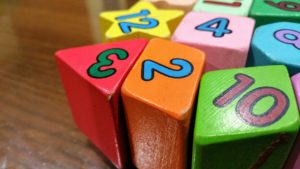
Many people outside of the education world, when these skills are broken down, may have thought of just counting numbers as what students in kindergarten need to know. Counting numbers in order is such an important skill but it is only the beginning.
Keep reading to find out specifically what each skill is, what it looks or sounds like, and how you can help your son or daughter practice each skill towards mastery.
Disclaimer, there is a progression for these skills. They are not all meant to be taught at the same time. Outside of meeting with your child’s teacher to learn more about their progress with number sense, find out what they can do and what they need more support in learning how to do.
Counting in Order
1, 2, 3, 4, 5, 6, 7, 8, 9, 10……
This is self explanatory. However, you don’t want children counting out of order and ending at 10. 1, 2, 3, 6, 9, 4, 5, 8, 7, 10! Many kids are excited to get to ten due to the fact that when their mom, dad, or anyone else is counting with them, there is usually an inflection in their voice that goes up once they arrive at the number ten. It is like an accomplishment. (Try it with a child and notice what happens when you get to ten ;))
Try this: Count in small increments of numbers. Begin with the numbers 1 – 10. Move on as children are ready. Next go to the numbers 11 – 20, 21 – 30, and so on. The goal by the end of the year is to count to 100.
A fun way to practice rote counting is through movement, songs, rhymes, and books. Children should have many opportunities to hear and practice the correct sequence of numbers.
Jack Hartmann in known for his educational children’s songs that support learning with young children. He has an awesome youtube channel that includes many videos counting to 100. I’ve included one of them below.
https://www.youtube.com/watch?v=VHwlKl5SsHc
One to One Correspondence
With a group of the same objects, such as crayons, – Point to one crayon and say the number one, point to the next crayon and say the number two, point to the next crayon and say the number three. And so on. The goal here is that the child is counting in order while pointing to objects, or in this case crayons, one by one. What you do not want to happen is that they point to each object and count out of order…one, two, three, six, five, nine, seven, etc.
Try this: If a child begins to mix up numbers as they are counting objects, show them how to do it correctly. Move the object as you say the number. Have them repeat what you did. Begin with the numbers 1 – 5. If that is too difficult, go down to 1 – 3. If they master 1 – 5 quickly, move on to numbers 6 – 10 and beyond.
Identifying Numerals

Now we are beginning to introduce numbers in written form as numerals. Children will need to associate the amount of three objects with the numeral three, or 3. This is not automatic. It takes a lot of practice. There is a smaller progression within this skill. First reading the numeral, next matching the numerals to an amount of objects, then finally, writing the numeral on their own to represent a quantity or an amount.
Try this: Place different sets of numbers of objects out for the child to count (begin with small numbers). Also have out numbers on cards. This can be written on index cards or strips of paper.
Have the child count an amount of objects in a set, they will need to choose the correct number written as a numeral that represents that amount.
Next practice writing the numerals with them. Fun ways to write the numerals can be in the air, in sand, or using shaving cream, or whip cream.
Cardinality
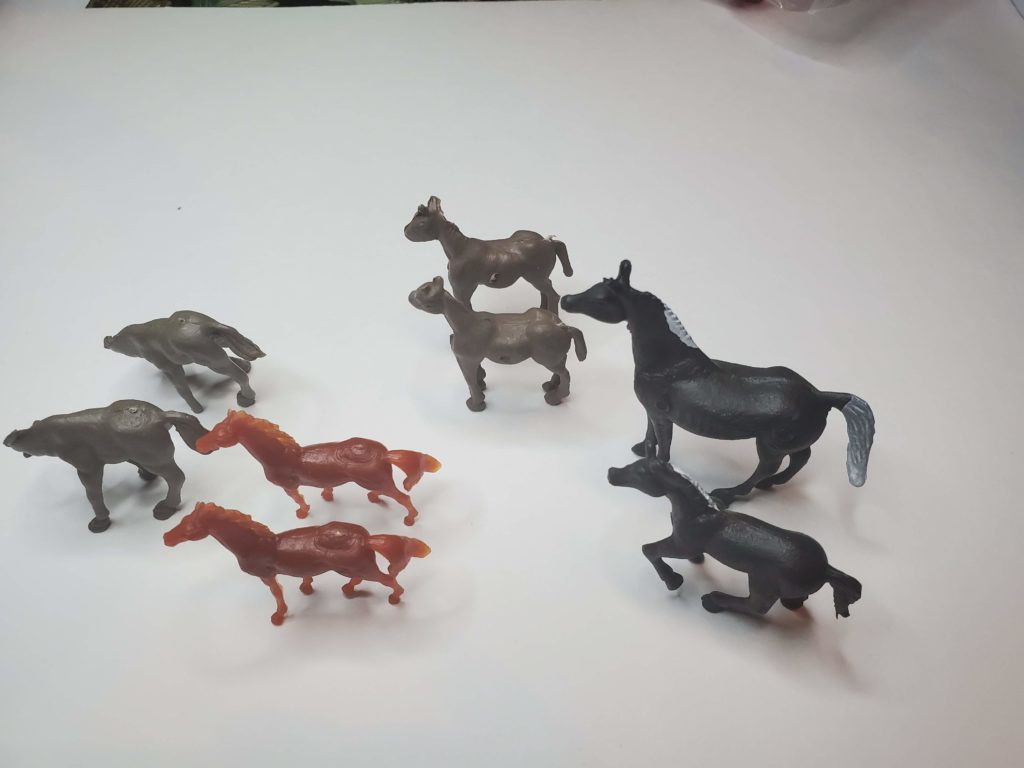
This is where your child counts an amount of objects, such as 7 crayons. When they count, 1, 2, 3, 4, 5, 6, 7 – if you ask them how many crayons there are – can they tell you 7 crayons, or do they need to begin counting all over again? Cardinality is knowing that the last number that was counted represents the amount of objects there are. Again, this seems simple, but it’s not. Not something automatic at all but comes with a lot of practice.
Try this: Allow your child to count out some objects. When they are done, ask them “how many did they count?” See if they can tell you without recounting. If they cannot, drop down to a smaller amount and begin again.
Subitizing
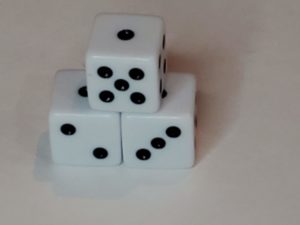
Can you say this word correctly five times in a row? Many people outside of elementary mathematics education have never heard of this word. But it is a skill that most of us have learned at a young age with smaller numbers. It is when you quickly identify the quantity of objects without having to count them.
So think about looking at dice. If you roll a die and it lands on the five side, you most likely can identify that the number is five without having to count each of the five dots separately. That is subitizing. It can definitely be done with larger numbers, but it is most important that children master subitizing numbers 1 – 10. This helps with the next skill of counting on from a given number. If a child can quickly see groups of five or ten when they are counting objects, then their efficiency of counting will increase.
Try this: Using manipulatives and math tools such as dice or a ten frame offers a good opportunity to practice subitizing.
Show your child one side of the die and then cover it or take it away. See if they can remember the amount that they saw.
Using ten frames that show different amount, allow the child to see one model of a ten frame and then take it away. See if they can remember the amount that they saw.
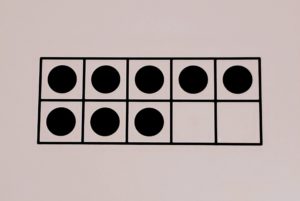
Repeat these tasks frequently for extra practice.
Counting On from a Given Number
So at this point we know that your son or daughter can count up to 10 (and hopefully move on to counting to 100). Can they start at 7 and count up to 10 or do they always begin at 1? Can they start at 33 and count up? This is another number sense skill that will come with a lot of practice.
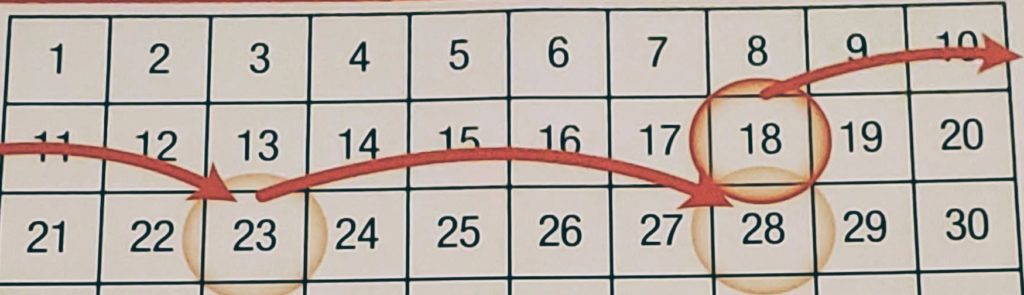
Try this: Use a hundreds chart and ask your child to count to a specific number like 26. Have them start at 17 however instead of them starting at 1. Practice this with different start and end numbers.
Grouping and Counting by Tens
The last number sense skill that we will focus on is counting by tens. Our world is mainly based around the base-ten system. We count by tens frequently: Ten pennies makes one dime. Ten dimes make one dollar. Ten tens make one hundred. Ten hundreds make one thousand. And so on. So counting by tens is a very important skill and is setting the foundation for understanding the place value system and how larger numbers are built. When your son or daughter counts to ten (and we get very excited) they have reached a benchmark, or important number.
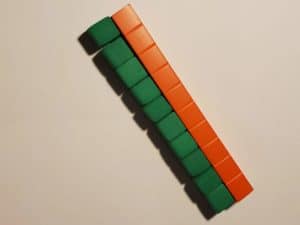
All of the next numbers in line will be ten plus another number.
When they get to twenty, it is two tens plus another number. And so on. This skill is very fun to practice when counting objects but as well as just skip counting by tens, which can be done anywhere.
Try this: Practice with your children counting by tens all the way to 100 or even 120. There is a fun and playful joy that comes with counting out loud. Have more fun with it by doing it with movement, to a beat or a song.
Here is another Jack Hartmann video where they are counting to 100 by tens.
I hope this break down of number sense skills important for Kindergarteners to learn was helpful to you. They will learn these skills at school but it is always beneficial for the child when their parents and families know and understand what learning is taking place and how it can be supported at home.
Below is a link to the common core state standards so that you can see what the full list of math standards are for students in Kindergarten.
Common Core State Standards – Math – Kindergarten – Counting and Cardinality
Many states, such as mine (Florida) have moved away from the common core standards which most states adopted years ago. However, the skills needed in each grade level are very similar.
I will link the Kindergarten math standards for some of the other states down below as well.
Mathematics Florida Standards (MAFS) – Grade K
Texas Essential Knowledge and Skills for Kindergarten
Mathematics Standards of Learning for Virginia Public Schools
Nebraska Mathematics Standards Kindergarten
Georgia Standards of Excellence Mathematics Kindergarten
Please share below what specific skill your son or daughter can do at the point of you reading this blog post. Wherever they are, the most important part is that they are having fun while they are learning because Math is Fun!
