
As elementary math educators, we are always seeking effective ways to teach our students important mathematical concepts. Comparing fractions is one such skill that forms the foundation for more advanced learning. In this blog post, we will explore a visual approach to comparing fractions with the same denominator using a rectangular area model. This method not only engages students but also helps them develop a deep understanding of fraction comparison.
Watch the full video here: Compare Fractions with the Same Denominator
The Power of Visual Representations When Comparing Fractions:
Visual aids can be powerful tools for teaching fractions. They allow students to see and manipulate fractions, making abstract concepts more concrete. Using a rectangular area model, we can help students compare fractions with the same denominator with ease and clarity.
An Example of Comparing Fractions with the Same Denominator:
Let’s dive into a practical example to illustrate the process. We will compare the fractions 4/6 and 5/6 using a rectangular area model.
Step 1:
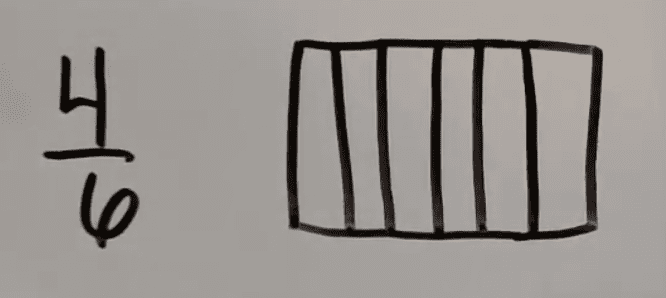
Drawing the Rectangles: Draw two rectangles on the board, representing the whole for each fraction. Since both fractions have the same denominator of 6, we can partition both rectangles into six equal parts.
Step 2:
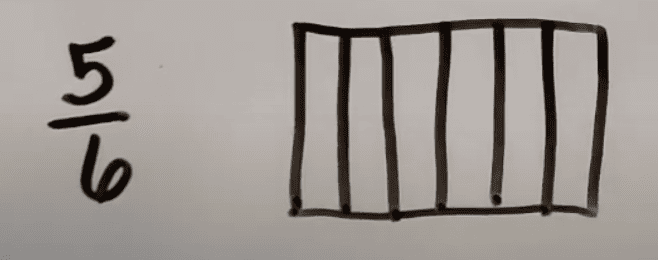
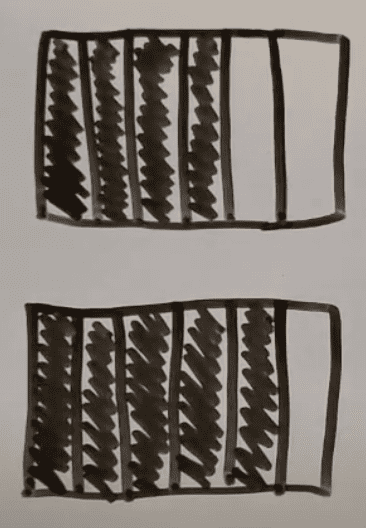
Partitioning the Rectangles: For the first rectangle representing 4/6, partition it in half and then divide each half into thirds. This creates six equal parts. Shade in four of these parts to represent 4/6.
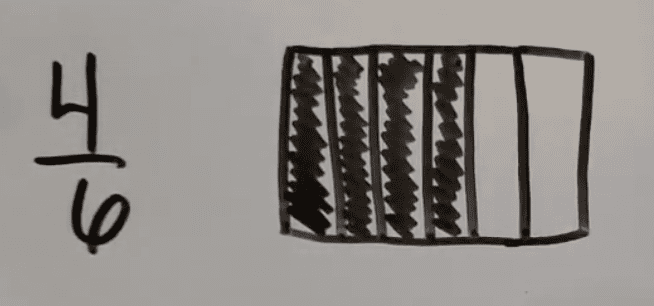
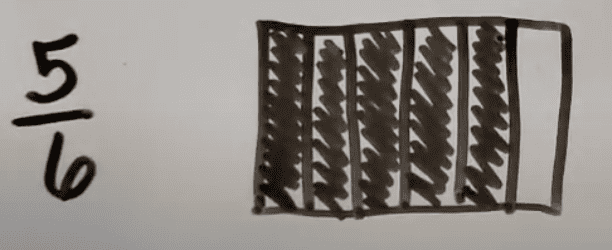
Next, move to the second rectangle representing 5/6. Again, partition it into six equal parts and shade in five of these parts to represent 5/6.
Step 3:
Visual Comparison: By comparing the two shaded rectangles, it becomes clear which fraction takes up more space of the whole. In this case, 5/6 is greater than 4/6.
Step 4:
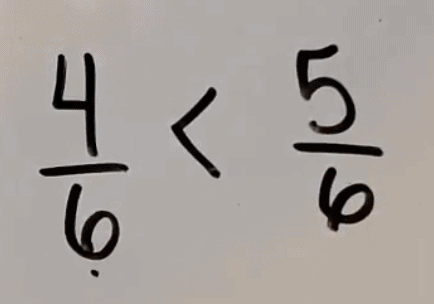
Writing the Comparison Statement: To express this comparison mathematically, we can use the greater than (>) and less than (<) symbols. Start with 4/6 and place 5/6 next to it. Since 5/6 is the greater fraction, we use the symbol that faces or opens towards 5/6, which is the less than (<) symbol.
Next Steps for Comparing Fractions:
Using a rectangular area model to compare fractions with the same denominator offers a visual and hands-on approach that engages elementary students in fraction comparison. By partitioning and shading, students can clearly see the relative sizes of fractions and make informed comparisons. This method not only strengthens their understanding of fractions but also lays the groundwork for future mathematical concepts.
Teach your students how to draw fractions using this easy to follow guide:
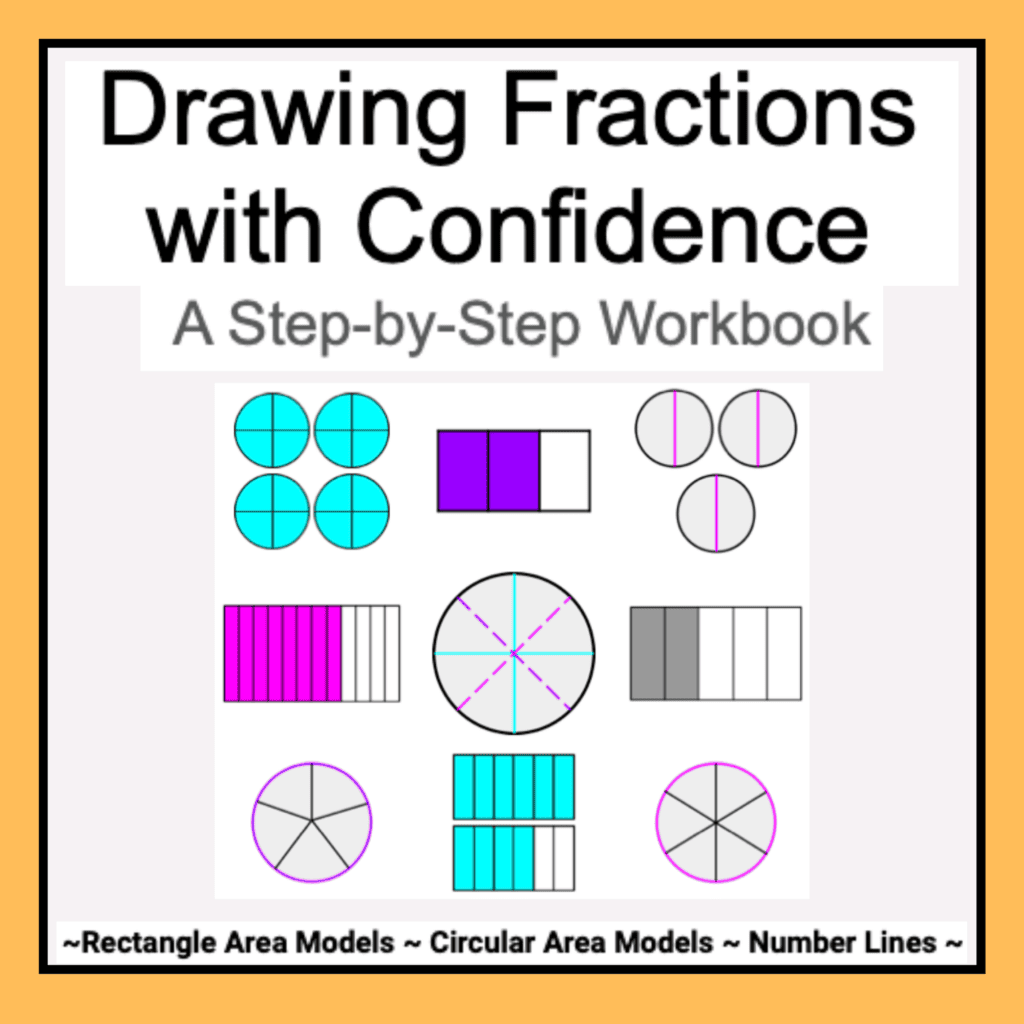
Drawing Fractions with Confidence: A Step-by-Step Workbook
