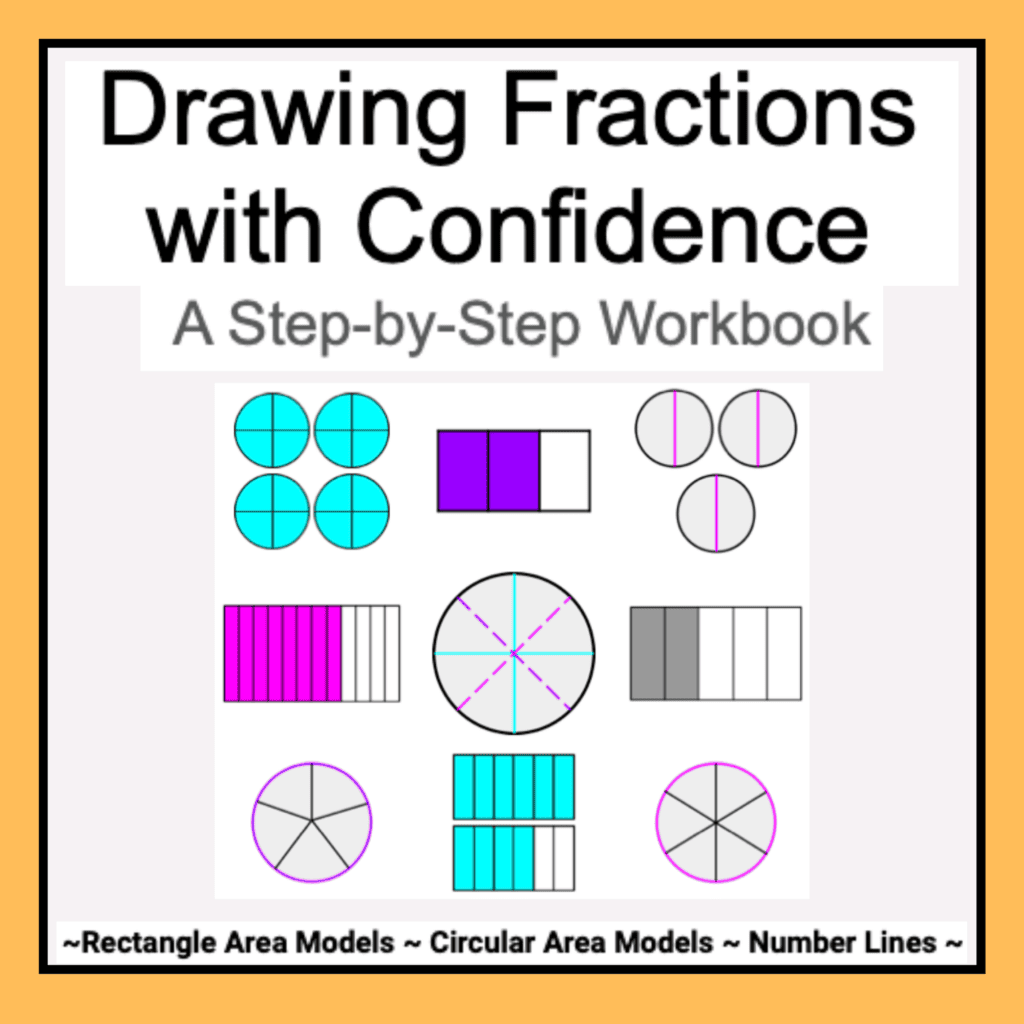
Understanding and comparing fractions is a crucial skill for elementary math students. In this blog post, we will explore a visual approach to comparing fractions with different denominators using rectangular area models. By visualizing the fractions as shaded areas, students can develop a deeper understanding of their relative sizes and make meaningful comparisons. Let’s dive in and compare the fractions 5/8 and 2/6 using this approach.
Watch the full video here: Compare Fractions with the Different Denominators

Comparing 5/8 and 2/6 with Rectangular Area Models:
When comparing fractions with different numerators and denominators, it’s important to consider the sizes of each part. In the example, there are the fractions 5/8 and 2/6. The numerators and denominators are not the same, so the parts you shade in your rectangular area models will look different.
Step 1: Partitioning the Whole:
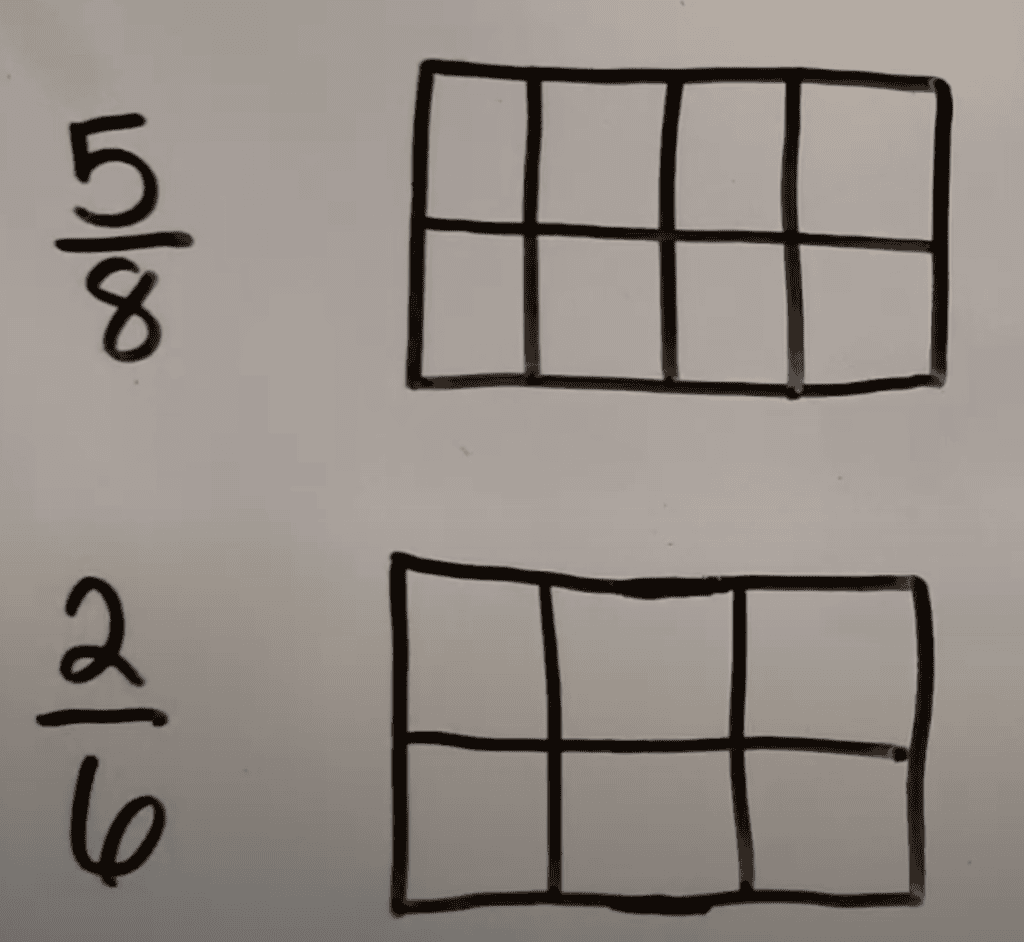
To begin, you need to partition the whole into equal parts according to the denominators of the fractions. For 5/8, you can divide the whole into eight equal parts, and for 2/6, divide the whole into six equal parts.
Step 2: Shading the Fractions:
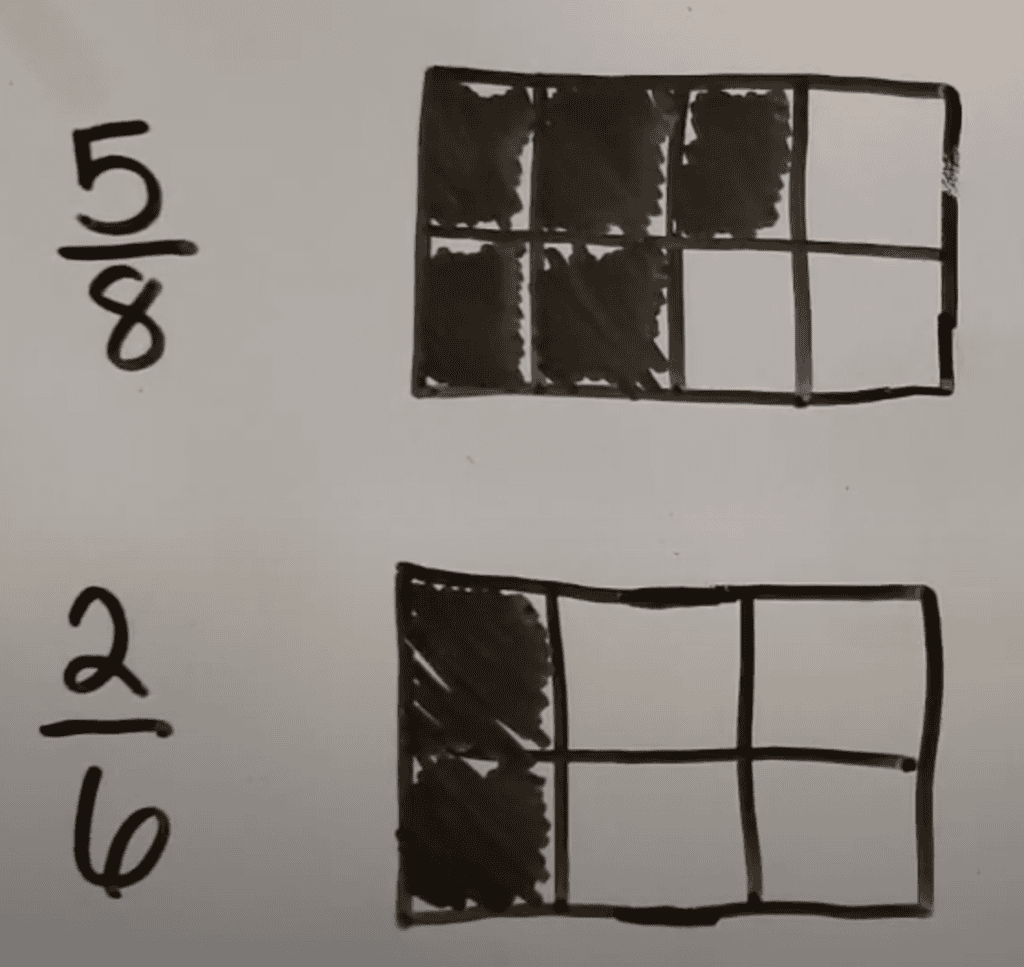
Next, shade in the appropriate number of parts for each fraction. Starting with 5/8, shade in five of the eight equal parts. In the case of 2/6, shade in two of the six equal parts.
Step 3: Visual Comparison:
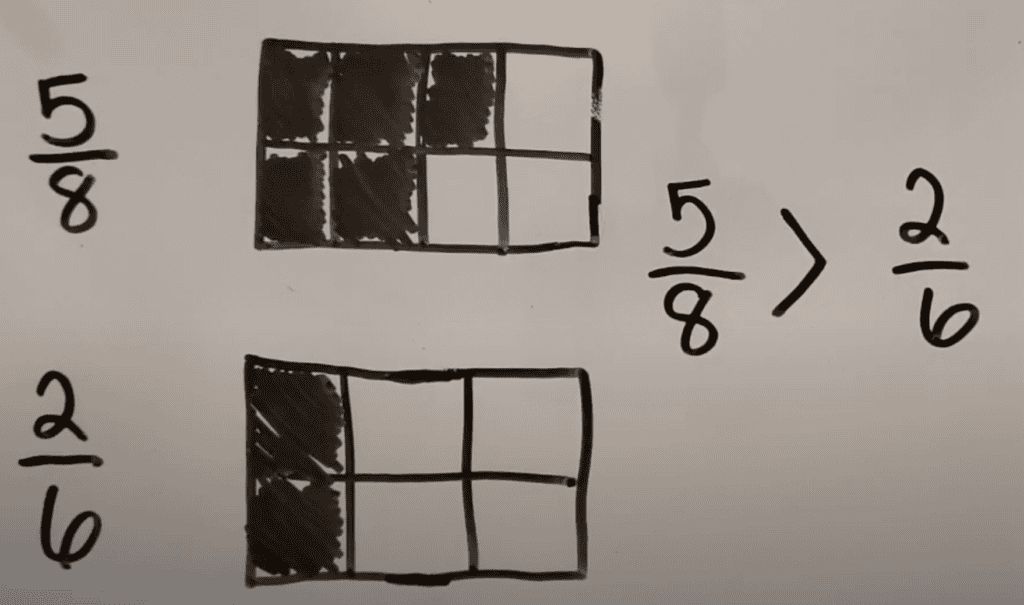
Now that you have shaded the respective fractions on both rectangular area models, you can visually compare them. By observing the shaded areas, it becomes apparent which fraction is larger.
Interpreting the Comparison:
In the example, the shaded area representing 5/8 is larger than the shaded area representing 2/6. Thus, you can conclude that 5/8 is greater than 2/6.
Writing the Comparison Statement:
To summarize your findings, write the comparison statement as follows:
5/8 > 2/6
Using the greater than symbol (>), further reinforces the comparison and indicates that 5/8 is greater than 2/6. The open side of the symbol points towards the larger fraction, which in this case is 5/8.
Conclusion:
By using rectangular area models, students can visually compare fractions with different denominators. This approach allows them to develop a deeper understanding of fraction sizes and make meaningful comparisons. Remember to encourage your students to observe the shaded areas and use the appropriate symbols to express their findings accurately.
Fractions are an essential component of elementary math education, and visual strategies like rectangular area models can greatly enhance students’ comprehension. By employing such techniques, we can empower our students to become confident in comparing fractions and build a solid foundation for further mathematical concepts.
I hope this blog post has provided you with a helpful approach to comparing fractions with different denominators. Use these techniques in your classroom and inspire your students’ mathematical growth. Happy teaching!
Teach your students how to draw fractions using this easy to follow guide: